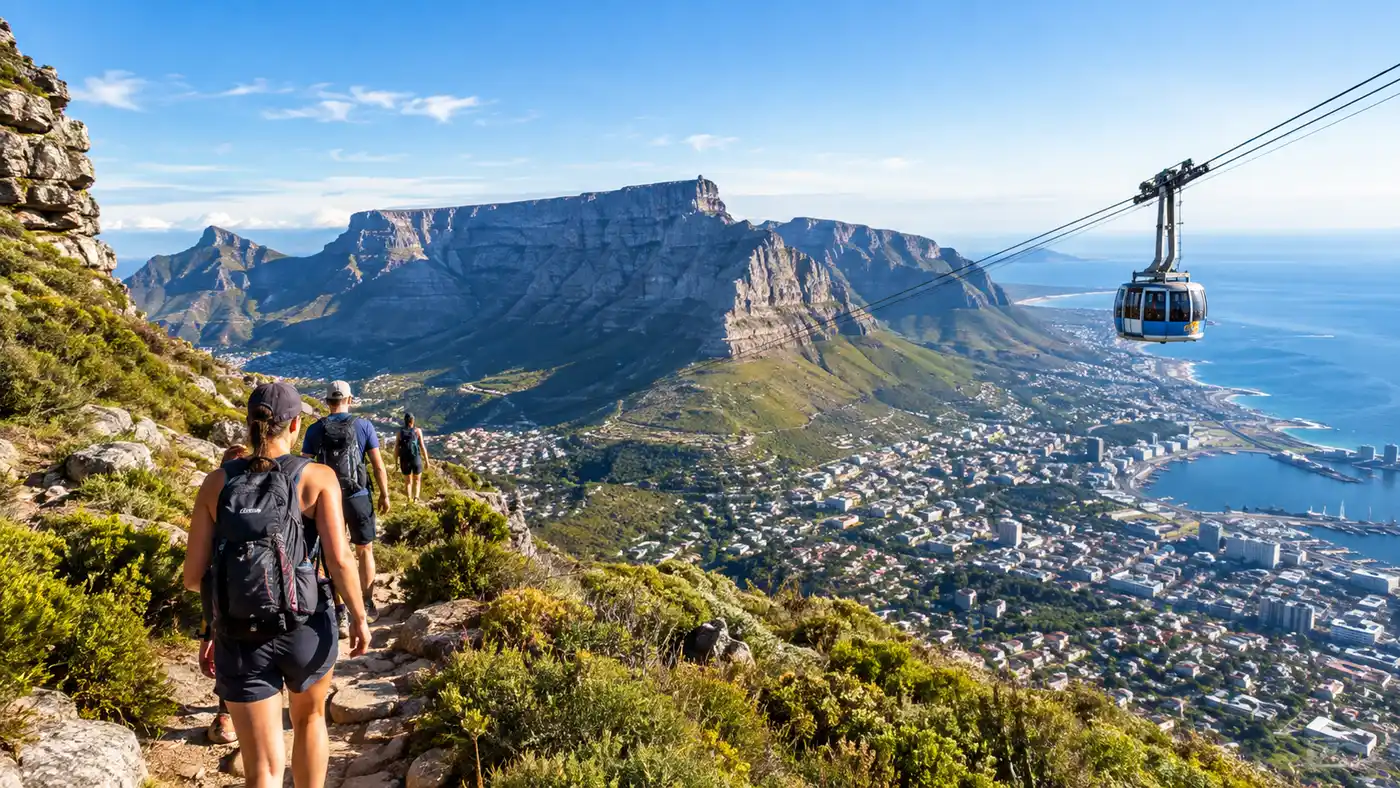
Hiking vs Cableway Best Way to Reach the Top of Table Mountain
You can see the flat sandstone slab from almost anywhere in the city, looming over the harbor and the Victorian row houses like a massive granite wall. Getting from cape town to table mountain takes less than fifteen minutes by car, but once you arrive at the base of Tafelberg Road, you face an immediate decision that defines your entire day. You either stand in line with tourists sipping flat whites for the rotating cable car, or you tighten the laces on your running shoes and stare up at thousand-meter vertical cliffs.
I have done both more times than I can count. I took visiting cousins up in the gondola on crisp weekday mornings, and I scrambled up loose rock gullies with friends on sweat-soaked Sunday afternoons. Neither choice is inherently superior, yet picking the wrong one for your fitness level, travel style, or weather conditions can ruin an otherwise glorious day. Here is how the two experiences actually compare on the ground.
Heading from Cape Town to Table Mountain: Two Radically Different Experiences
The journey starts the same way for everyone. You drive or catch a rideshare up Kloof Nek Road, turn onto Tafelberg Road, and search for parking along the road shoulder. From there, the paths diverge violently. Going up the mountain via the cableway means trading physical strain for logistical patience. You buy a ticket, wait in cattle-pen queues, and board a rotating cabin that whisks you 700 vertical meters into the sky in four minutes flat.
Hiking, on the other hand, demands immediate respect. People constantly ask me: can you walk up Table Mountain without mountaineering gear? Yes, absolutely. But walking here is rarely gentle. There are no switchbacking paved paths with gentle inclines. The mountain is essentially a fortress of sandstone and granite. The trails punch directly up fractures and gorges, turning into relentless outdoor stair-climbers from step five.
If you take the cable car, your focus is panoramic and effortless. You look through thick glass windows as Lion's Head shrinks beneath you and the Atlantic coastline unrolls toward Camps Bay. If you walk, your world narrows to the three feet of rock in front of your nose, the smell of sunbaked fynbos scrub, and the sound of your own heavy breathing.
Pro tip: If you take an Uber from the city center, set your drop-off point to the Lower Cableway Station even if you plan to hike Platteklip Gorge, as it saves you a tedious 1.5-kilometer uphill road trudge in direct sun.
Book your hiking tours cape town experience:
Taking the Cableway: Fast, Easy, and Wind-Prone
The Table Mountain Aerial Cableway - often searched by European travelers under its French label, the table mountain téléphérique - has been operating since 1929, though the modern cabins with 360-degree rotating floors date to 1997. It carries roughly 800 passengers an hour when operating at full tilt. It is smooth, marvelously engineered, and accessible to anyone regardless of age or physical condition.
The catch is the wind. The famous southeasterly wind, known locally as the Cape Doctor, regularly shuts the cableway down without warning. You can check the website at breakfast, see green checkmarks across the board, drive up the hill, and arrive just as staff roll out the closure signs. Cloud cover can also swamp the upper plateau within twenty minutes, reducing three-hundred-kilometer views to twenty paces of freezing white mist.
Tickets are not cheap either. An adult round-trip ticket costs around 430 rand in the morning, which drops slightly for afternoon slots. If you happen to visit during December or January, lines at both the bottom and top stations can swallow up two hours of your afternoon. You spend significant time waiting in shaded concrete corridors listening to tour group chatter.
Still, watching the city tilt away beneath the revolving floor remains genuinely thrilling. For travelers with limited time, small children, or bad knees, the cableway is an engineering blessing that delivers world-class summit views with zero sweat.
Deciding to Hike Up Table Mountain: Routes, Effort, and Reward
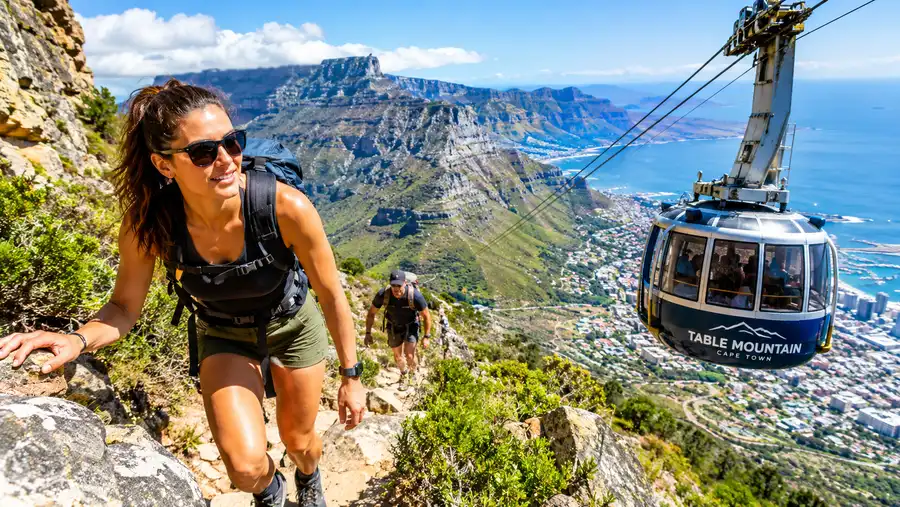
If you decide to climb Table Mountain under your own steam, the mountain reveals details that cable car passengers never notice. You spot tiny sunbirds dipping into bright orange protea blossoms, feel cold mountain water dripping down shaded cliff crevices, and experience the quiet majesty of sheer rock buttresses towering over your shoulder.
The most straightforward route is Platteklip Gorge, which starts just past the cable station. It is essentially a giant natural staircase carved into a cleft on the front face. It requires zero technical climbing or scrambling, which leads many tourists to underestimate it. On warm afternoons, the gorge turns into a stone oven. If you want a full breakdown of the climb duration, check out how long does it take to hike Table Mountain before setting off in cheap flip-flops.
A lot of visitors wonder: is hiking up Table Mountain free? Yes, entry to Table Mountain National Park from the front face requires no permit or fee. You can simply walk onto the trail. However, hiking Table Mountain without a guide is only sensible on clear, well-marked paths like Platteklip or the classic routes starting from Kirstenbosch on the eastern slopes.
For those who want variety instead of endless stone stairs, trails like Skeleton Gorge or India Venster offer ladders, scrambles, and forest canopies. If you choose a direct route like the steep Platteklip Gorge hike, expect about two to three hours of grueling uphill walking that tests your quadriceps and cardiovascular engine.
Note: Never attempt to hike down India Venster or any trail marked with yellow climbing staples, as descending steep rock scrambles accounts for the vast majority of mountain rescue callouts.
Book your hiking tours cape town experience:
Comparing Cable Car and Hiking Logistics from Cape Town to Table Mountain
Deciding between these two modes comes down to balancing physical stamina against budget, schedule, and personal taste. The table below outlines the core differences for going up Table Mountain so you can judge what fits your morning itinerary.
| Factor | Cableway (Téléphérique) | Hiking (Platteklip Route) |
|---|---|---|
| Time required | 4 minutes transit (plus 30-90 min queue) | 2 to 3.5 hours of continuous ascent |
| Cost (per adult) | Around R430 return / R240 one-way | Completely free |
| Physical demand | Minimal (standing on flat platform) | High (steep elevation gain of 700m+) |
| Weather sensitivity | Closes immediately in high winds | Trails open, but wind/rain adds danger |
| Experience | Social, fast, sweeping panorama | Solitary, physical, immersive nature |
Both methods get you to the same flat summit plateau, where you will find paved paths, viewing lookouts, a self-service cafe, and restrooms. The difference is how you feel when your feet hit that flat limestone surface. When you walk off the cable car, you feel like an observer visiting an aerial park. When you pull yourself up the final stone steps of a gorge, you feel a deep, satisfying sense of accomplishment that money cannot buy.
Practical Rules for Going Up Table Mountain
Regardless of whether you plan to ride the mechanical car or tackle the rocky trail, mountain conditions catch unprepared travelers off guard every single week. Here are practical principles to keep you safe and comfortable:
- Check the live operational board: Look at the cableway website thirty minutes before leaving your accommodation to see if the cars are running or grounded by wind.
- Pack warm layers even in summer: The summit sits over a thousand meters above sea level, meaning it is consistently five to eight degrees colder than the city bowl below.
- Carry ample drinking water: Bring at least 1.5 liters per person for hikes, as there are zero water taps or streams along the dry front trails.
- Save emergency contact numbers: Program the Metro Emergency Operations Centre (+27 21 480 7700) into your phone before setting foot on the trail.
- Buy tickets online beforehand: Cableway lines split into ticket buyers and ticket holders; having a barcode on your phone cuts your wait time in half.
The Hybrid Strategy: The Best of Both Worlds
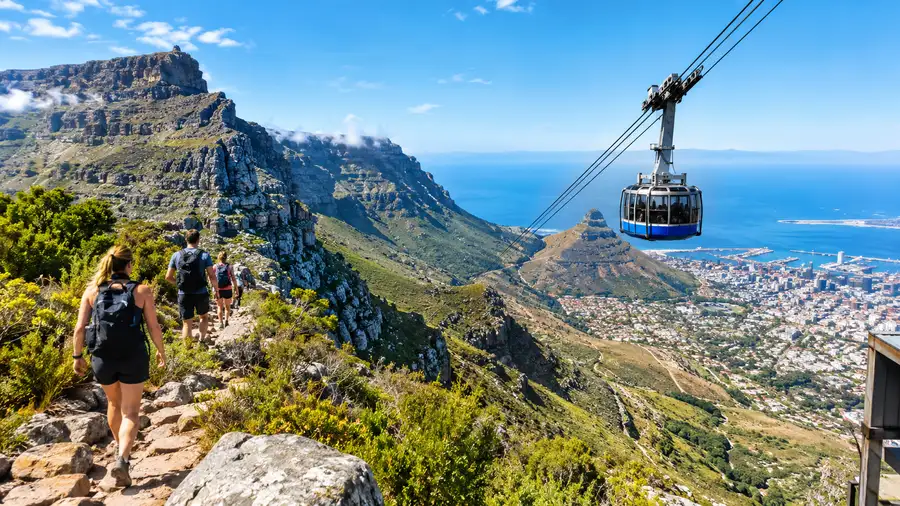
If you have reasonable fitness, my favorite way to experience the mountain is neither pure hiking nor pure riding. The sweet spot is hiking up and taking the cableway down. Going up gives you the full wilderness workout, the morning solitude, and the satisfaction of earning the vista. Riding down saves your knees from two hours of punishing, jarring impacts on steep downhill granite steps.
You can buy a one-way downhill ticket right at the upper cable station ticket desk, or through your phone using the free summit Wi-Fi while eating an ice cream at the cafe. It costs roughly 240 rand. The only gamble is the weather. If the southeaster picks up while you are climbing, the cable car will shut down, and you will have no choice but to walk back down the gorge on tired legs. Always keep twenty percent of your energy in reserve just in case.
If your knees are frail, do not hike down. Downhill descents cause far more twisted ankles and slips on loose gravel than uphill climbs. If the cableway closes while you are at the top and you cannot physically hike down, park rangers and cableway staff provide assistance, though you might wait hours for a service run or escorted descent.
Frequently Asked Questions about cape town to table mountain
Can you walk up Table Mountain if you are not an experienced hiker?
Yes, provided you choose Platteklip Gorge and take regular breaks. It is technically easy with no climbing moves or drop-offs, but it demands solid cardiovascular endurance and strong leg muscles. If you can climb thirty flights of stairs in a building without collapsing, you can walk up the gorge.
What happens if the cable car closes while you are at the top?
Staff sound an audible siren across the plateau alerting visitors to head immediately to the upper station before the final descent. If the wind shuts operations completely, visitors who cannot hike down are gathered by park rangers, and contingency descents or guided walk-downs are arranged depending on conditions.
Is it better to do Table Mountain in the morning or afternoon?
Early morning is generally superior for both hiking and riding. The wind tends to be gentler before midday, lines at the lower station are shorter, and hikers avoid the intense midday heat radiating off the rock face.
Quick Reference
- Cable car transit time: 4 minutes
- Average hike duration: 2 to 3 hours
- Summit elevation: 1,086 meters
- Cable car status: Highly wind-dependent
- Cost: Free on foot, ~R430 return for cableway
Book your hiking tours cape town experience:
The Bottom Line
If your Cape Town trip spans only two or three days, book an early morning cableway slot so you can drink in the views and move on to lunch in the Winelands without muscle soreness. But if you have time to recover, and if your body is up for a physical challenge, climb it. Walking up that ancient rock will give you an intimate connection with the city that no four-minute scenic ride can ever replicate.
Read more about hiking tours cape town.